Holy Week Houston:
How This Sacred Season Shapes My Faith
By Pastor Jon Burnham,
St. John’s Presbyterian Church
I grew up in Morton, Mississippi. Small town. Good people. And a Baptist church that took its faith seriously.
Morton Baptist was not a cold, dead congregation. Far from it. The preaching was alive, the singing was genuine, and the people who sat in those pews on Sunday mornings actually believed what they were saying. My parents took me there faithfully, and I am grateful for every bit of it. The faith I carry today was planted in that soil.
But we did not celebrate Holy Week.
Christmas Sunday and Easter Sunday, yes. Those were on the calendar. Everything else, though? Well, the prevailing attitude in that tradition was that liturgical seasons were, to put it bluntly, popish fluff. Leftovers from Rome that serious Protestants had rightly left behind. Ash Wednesday? For Catholics. Palm Sunday? A little theatrical, don’t you think? Good Friday? We know Jesus rose, so why dwell on the cross?
And the Lord’s Supper. Once a year. One time. A single occasion in twelve months to receive bread and cup.
I did not know to question any of this. It was just how church worked.
Somewhere in my early-twenties, I started attending a Presbyterian congregation because they gave me a choir scholarship. I did not go there looking for liturgy. I was not on some quest for ancient spiritual practices. I just showed up, and what I found was a church that moved through time differently than I was used to.
They had a printed bulletin, which I recognized. But the bulletin referenced something called the Season of Advent. Then Epiphany. Then came Lent, stretching across weeks, with a particular texture to the worship that I could not quite name at first. Then Holy Week arrived, and it was like watching a story I had always known get told out loud for the first time.
Palm Sunday. Maundy Thursday. Good Friday. Holy Saturday. Easter Sunday.
Five days. One story. The whole arc of what happened in Jerusalem before the resurrection, spread across an entire week so you could actually feel the movement of it.
I remember sitting in a Good Friday service that first year and being genuinely unsettled. The lights dimmed. The sanctuary grew quiet. A single candle was extinguished. The service ended without a benediction, because the story was not over yet. You just walked out into the dark and waited.
I had never done that before. Never waited for Easter. I had always just arrived at Easter fully informed, knowing how it ended, skipping the grief and the silence and the not-knowing.
That Good Friday service cracked something open in me that has not closed since.
Let me try to explain what the Christian liturgical calendar actually is, because a lot of people sitting in Houston churches on Sunday morning have never had anyone explain it to them plainly.
The church year is essentially a structured journey through the life of Jesus, repeated every single year. You do not just read about these events as historical facts in a classroom. You live through them again, in sequence, with your congregation, season after season until the rhythm is part of you.
Advent is the waiting. Four weeks of preparing for the birth of a Savior, sitting in the posture of a people who do not yet have him. Christmas arrives and the waiting breaks open into celebration. Epiphany follows, celebrating the moment the light of Christ became visible to the wider world, marked by the visit of the Magi. Then comes Ordinary Time, that long middle stretch of the year when Jesus was doing his earthly ministry, teaching, healing, calling disciples.
Lent begins forty days before Easter, in the wilderness. Jesus fasted for forty days after his baptism, and Lent mirrors that season. It is a time of honest self-examination, of sitting with mortality, of stripping away pretense. Ash Wednesday opens it with the words “remember that you are dust, and to dust you shall return.” Not cheerful. Necessary.
And then Holy Week arrives.
If Lent is the wilderness, Holy Week is the valley.
Palm Sunday begins with a parade, and if you read the gospel accounts carefully, you notice something uncomfortable. The crowd cheering Jesus into Jerusalem on Sunday will be screaming for his crucifixion by Friday. Same people, probably. That is not incidental detail. That is the point.
Maundy Thursday is the Last Supper, the night Jesus washed his disciples’ feet and gave them a new commandment: love one another as I have loved you. The word “maundy” comes from the Latin “mandatum,” meaning commandment. We eat bread and cup together and hear again what Jesus asked of us the night before he died.
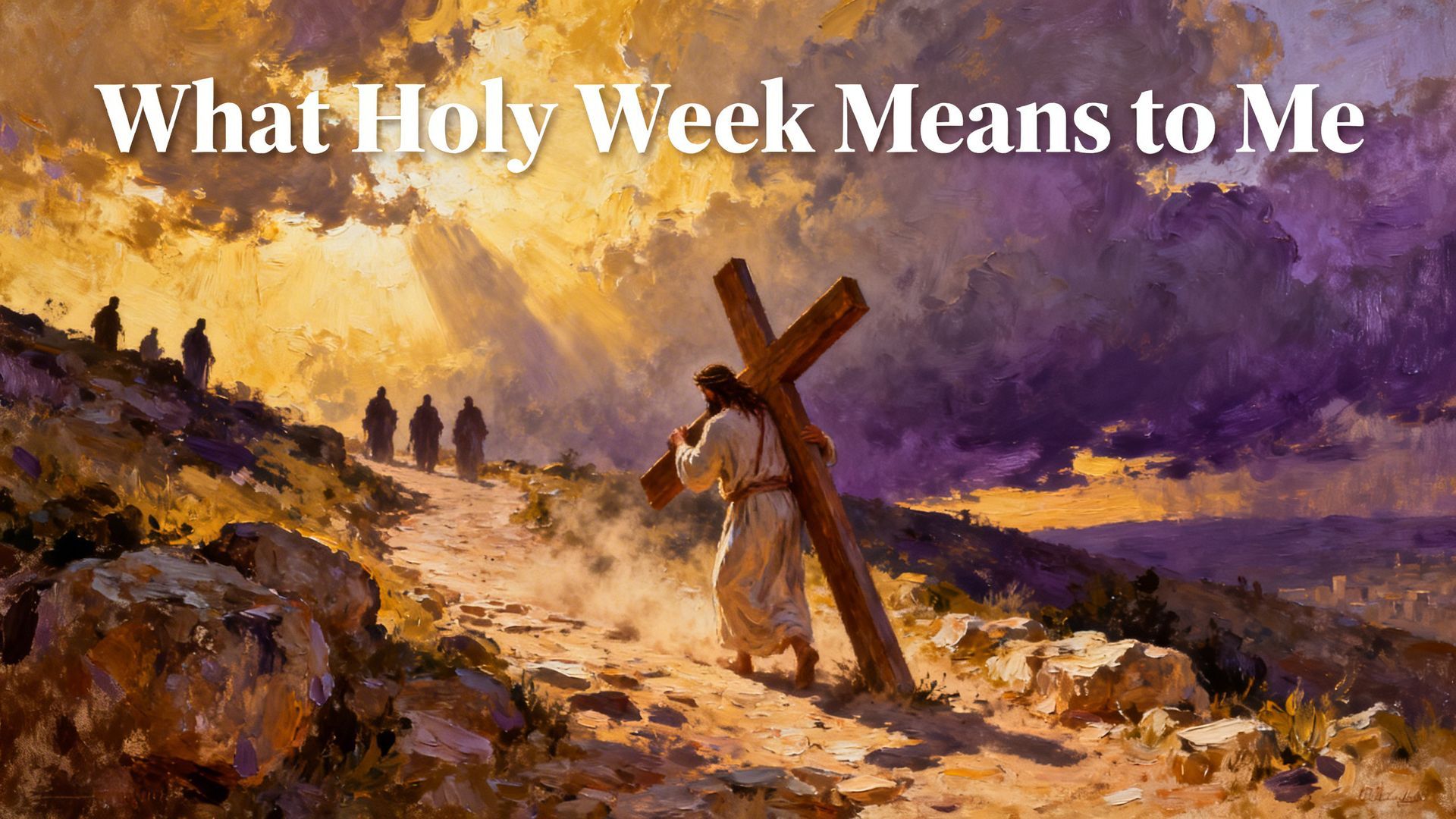
Good Friday is the hardest day in the Christian year. There is nothing good about it in the obvious sense. The name most likely comes from “God’s Friday,” an old usage, or from “good” in the sense of “holy.” Whatever the etymology, it is the day we sit with the crucifixion. No triumphant hymns. No easy reassurance. Just the cross.
Holy Saturday is almost nothing. A waiting day. The disciples were hiding, frightened, crushed. We do not have many Holy Saturday services. That silence is probably appropriate.
Easter Sunday breaks everything open. The stone is rolled away, the tomb is empty, and everything that had seemed finished is not finished at all. Death did not get the final word.
When you move through all five of those days, year after year, something happens to your understanding of Easter that simply cannot happen if you just show up Sunday morning and skip the rest. The joy is sharper. The surprise is more real. You actually feel the relief, because you have been sitting in the grief.
A sports analogy came to me years ago, and I have never found a better one for explaining this.
Consider the devoted college sports fan. Their entire year is organized around a schedule they did not create but have completely internalized. September arrives and you know it is football. The calendar in their head is not a generic calendar. It is a sacred calendar. Winter means basketball, and there is something right about that. Spring arrives and baseball is warming up. Summer is a kind of waiting, an Ordinary Time in its own way, until September rolls around again and the whole beautiful cycle restarts.
Ask that fan where they are in the year, and they will not just give you a month. They will give you a position in the season. “We’re three weeks into conference play.” “Spring training starts next month.” “The bowl games are coming up.” They are oriented by something bigger than a date. They are oriented by a story that keeps telling itself.
The liturgical calendar works exactly the same way. Ask me where we are in the year, and I will tell you without thinking: we are in Holy Week, the last days of Lent, approaching Easter. I know my coordinates in sacred space. I know what story we are living through right now and what comes next. That orientation is not just intellectual. It is felt, in the bones, the way a lifelong fan feels the change of a season before the schedule ever announces it.
Without that calendar, the year is just weeks going by. With it, you are always somewhere. You are always in a story.
I think often about what I missed growing up without this.
Understand, I am not criticizing the Baptist tradition. My formation in that church was real and lasting. The people there loved God and loved each other and preached a gospel they believed with their whole hearts. I owe that congregation more than I can say.
But I do wonder what it would have meant to sit in the silence of Good Friday as a child. To feel the waiting of Holy Saturday. To arrive at Easter Sunday not as a predetermined event on a secular calendar but as a genuine breaking-in of resurrection after days of grief and uncertainty.
There is something about observing Holy Week with your body, not just your mind, that makes the resurrection a different kind of claim. When you have actually grieved, even liturgically, even symbolically, the joy of Easter morning lands differently. You do not just know Jesus rose. You feel what that means.
That is, I think, what liturgical time does at its best. It trains you to feel the gospel, not just understand it.
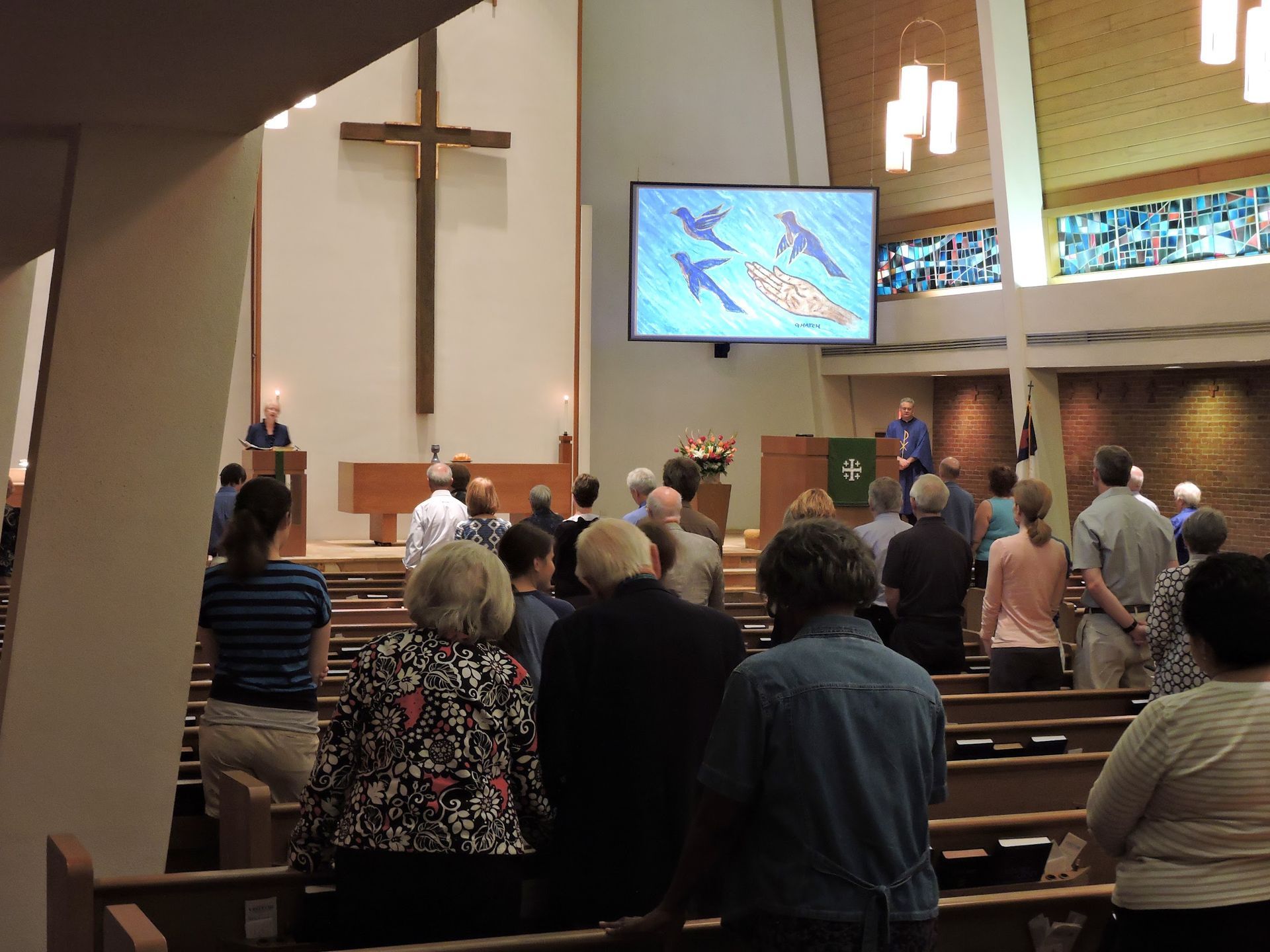
At St. John’s Presbyterian Church in Houston, we move through the full sweep of Holy Week every year. Palm Sunday worship opens the week. Maundy Thursday brings us to the Lord’s Table together, with communion and foot-washing and the stripping of the sanctuary, that strange and moving ancient rite where the linens and candles are removed in silence until the chancel is bare the service ending without resolution, the lights lowered. Good Friday is a day for silent processing what is happening to us this. It holds us in the darkness and mystery of the sacred story.
And then Easter arrives.
We come back on Sunday morning to the same sanctuary, dressed completely differently. White. Flowers. The alleluia that has not been spoken aloud since Ash Wednesday. And the empty tomb, proclaimed again as if for the first time, because in a real way it is the first time, this year.
If you have never experienced Holy Week this way, I want to invite you to try it. You can join us at St. John’s for Easter worship at 11:00 AM, but I would honestly encourage you to come for the full week if you are able. Start on Palm Sunday. Make your way through to Easter. See what happens to your experience of the resurrection when you have actually sat in the sorrow first.
It may surprise you.
The question of what makes worship meaningful is one I have been thinking about for over forty years of pastoral ministry. I have served congregations in Mississippi, Tennessee, Missouri, and now Texas. I have preached in tiny chapels and auditorium-sized sanctuaries. I have been present at baptisms and funerals, at moments of extraordinary crisis and ordinary Tuesday mornings.
What I have found, slowly and without always being able to articulate it, is that we human beings need to be oriented. We need to know where we are. We carry so much confusion about time, about what matters, about where the story is going. The liturgical year gives us an answer to that confusion every single week of our lives. You are here. This is what season we are in. This is the story we are living through together.
Holy Week is the center of that year. Palm Sunday through Easter Sunday is the story that all the other stories are reaching toward. This is the week that decides everything else.
I am not a young man discovering this for the first time anymore. I have walked through Holy Week more times than I can count now. And still, every year, Good Friday lands with weight. Every year, Easter Sunday feels like a genuine surprise. The calendar keeps giving me that.
I am grateful.
So how about you? Have you ever observed Holy Week in its fullness, moving through the whole arc from Palm Sunday to Easter? Or did you grow up, like me, arriving at Easter Sunday as a destination rather than a culmination?
If you are curious what this looks like up close, St. John’s Presbyterian Church is located at 5020 West Bellfort Avenue in southwest Houston. We serve the Westbury, Meyerland, and Bellaire neighborhoods, and we would be genuinely glad to have you join us. You can also read more about what our Presbyterian worship tradition looks like throughout the year and learn about our Sunday morning and weekly community before you visit.
Peace,
Jon B.
St. John’s Presbyterian Church | 5020 West Bellfort Ave, Houston TX 77035 | (713) 723-6262 | stjohnspresby.org